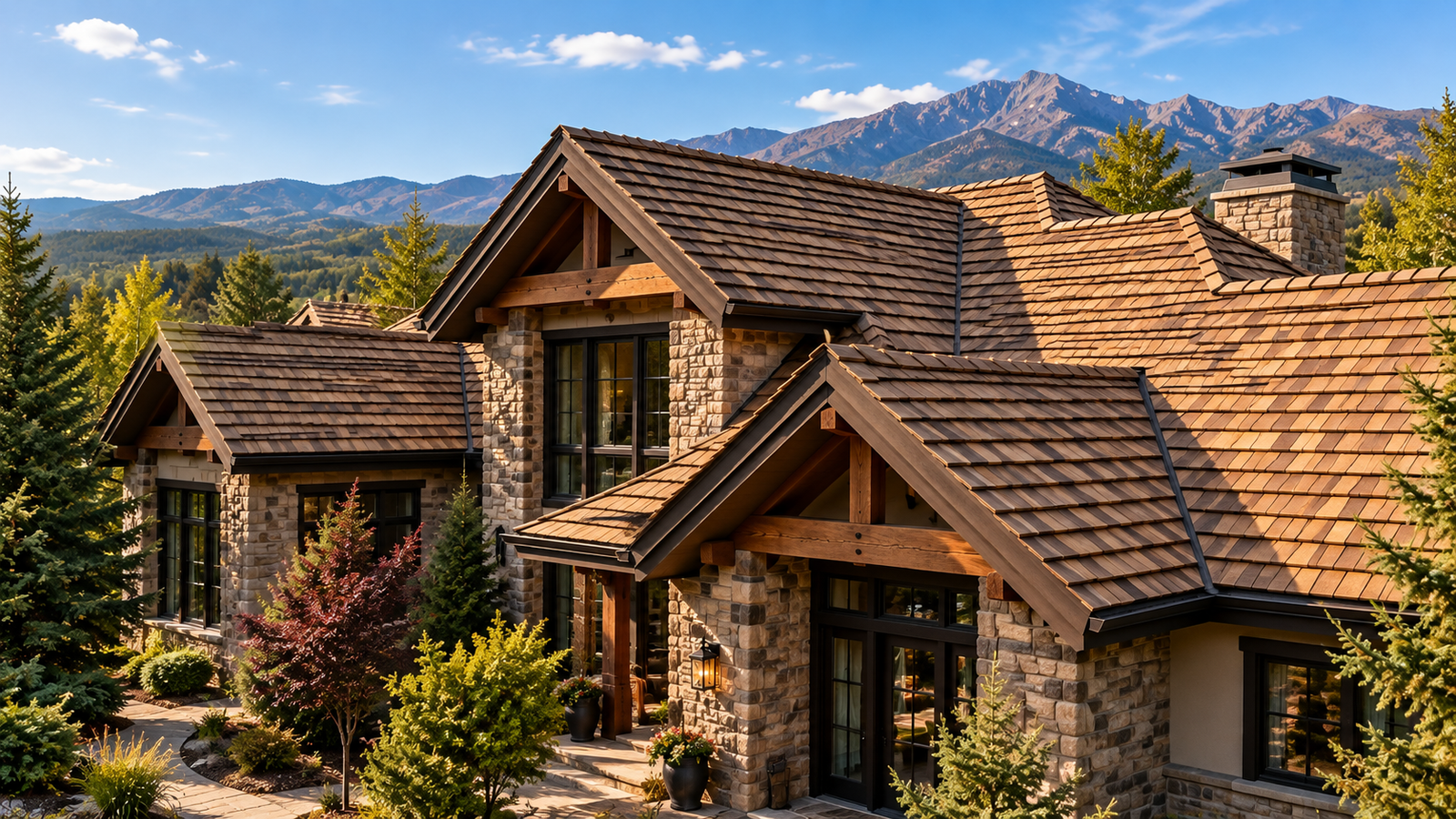
Wood shake roofing
Wood Shake Roof Preservation, Repair & Replacement
Keep the character. Understand the condition.
Keep the Character. Understand the Condition.
Start with the roof you already own. Crown Eagle Restoration helps homeowners understand visible cedar-roof conditions and consider preservation, repair or replacement based on the available findings. We explain what we observed, what remains unknown and what may deserve closer attention.
No restoration agreement required to receive the initial written condition report.
Request a Review
A request is not a construction contract.
Request a Property Review
Written inspection report included. No obligation. No sales pitch.
Wood shake is a system. We treat it like one.
Most contractors look at a wood shake roof and see a replacement opportunity. Crown Eagle looks at it methodically, with documentation. Shakes. Underlayment. Flashings. Ridge. Valleys. Penetrations. Each component tells part of the story.
Crown Eagle principle
"Most contractors look at a wood shake roof and see a replacement opportunity. We look at it methodically — every component, every transition."
The evaluation
What a wood shake evaluation covers.
Crown Eagle evaluates relevant visible and safely accessible conditions within the agreed scope. That includes the shakes, flashings, drainage, and accessible transitions. The evaluation produces a complimentary written Property Condition Report of what was observed.
"A repair is only as sound as the roof around it."
01
Shakes
Surface condition, splitting, cupping, moss and lichen growth, missing shakes, and overall weathering pattern.
02
Flashings
Valleys, penetrations, chimneys, and wall junctions — where water problems typically originate.
03
Drainage
Gutters, downspouts, and valley geometry. How water moves off the roof affects how quickly the system deteriorates.
04
Written Condition Report
Findings documented in writing with close-up photography. You keep the complimentary written Property Condition Report regardless of what work follows.
What we look for
Conditions worth evaluating.
These are the conditions Crown Eagle looks for during a wood shake evaluation. Their presence does not automatically indicate failure — but each is worth understanding.

Moss and lichen growth
Moss holds moisture against the shake surface, accelerating weathering. Lichen physically penetrates the wood fiber. Both are worth evaluating — neither automatically means replacement.
Splitting and surface checks
Not all splits are equal. A split that creates an opening in the weather barrier is different from a surface check that does not. The orientation and character of the split matters.
Raised and cupped edges
Cupping occurs when one face of a shake dries faster than the other. Moderate cupping in sound shakes is different from severe cupping that has lifted edges and created water pathways.
Missing shakes
Missing shakes expose the underlayment and adjacent shakes to direct weather. The condition of the surrounding material affects whether spot replacement is practical.
Drainage and debris
Debris accumulation in valleys and gutters holds moisture against the roof surface. Gutter condition affects how water moves off the eave course.
Flashing condition
Valleys, penetrations, chimneys, and wall junctions are where water problems typically originate. Flashing condition is often more consequential than shake condition.

Preservation
Preservation first.
Preservation — cleaning, treatment, and spot maintenance — can extend the useful life of a wood shake roof that is in reasonably sound condition. It is not a remedy for structural failure or widespread shake deterioration.
The appropriate scope depends on the actual condition of the roof. A useful evaluation distinguishes between what preservation can address and what it cannot reverse.

Repair
Repair where practical.
Localized repair is practical when the problem is contained and the surrounding material is in sound condition. The condition of the shakes adjacent to the problem area is as important as the problem itself.
Material compatibility — species, grade, and dimension — affects how the repair performs over time. A repair that addresses the visible problem without accounting for surrounding conditions may need to be repeated.

Replacement
Replacement when necessary.
Replacement becomes the appropriate conversation when deterioration is widespread, when the surrounding materials cannot support dependable repairs, or when preservation and localized repair are no longer practical.
Crown Eagle evaluates the available information and explains relevant considerations before proposing restoration work. Replacement is a considered decision, not an automatic starting assumption.
Preserve. Repair. Replace. Start with the condition.
Preserve
Care for what remains serviceable.
Where the cedar and surrounding roof system remain serviceable, appropriate maintenance may deserve consideration. Review debris, drainage, drying conditions and roof details before choosing a care approach. Preservation is not a promise that every roof can be saved.
- Pine needles and organic debris
- Gutters and roof drainage
- Moss or vegetation accumulation
- Flashing and roof transitions
- General shake condition
Preservation does not guarantee additional roof life. Cleaning, coatings, or treatments cannot restore severely deteriorated wood. Any treatment must be evaluated for suitability.
Repair
A repair is only as sound as the roof around it.
Localized work may be practical when compatible materials can be integrated with sound surrounding components. The condition of adjacent shakes, the underlayment, and the flashing all factor into whether a repair will hold. The question is not simply whether one piece can be replaced, but whether the completed repair will be dependable.
- Compatible cedar-shake materials
- Existing shake thickness and profile
- Exposure and fastening requirements
- Condition of adjacent shakes
- Access to underlying components
- Applicable HOA and municipal requirements
Replacing one damaged shake does not automatically resolve the surrounding roof's condition. The question is whether a sound, compatible repair is practical.
Replace
Replace when the findings support it.
Replacement deserves consideration when broader deterioration or repair limitations make smaller interventions impractical. Explain the reasons, remaining uncertainties and relevant requirements before proposing a scope.
Crown Eagle evaluates the available information and explains relevant considerations before proposing restoration work. Replacement is a considered decision, not an automatic starting assumption.
Visual guide
Know What You're Looking At.
One Roof. Different Conditions. Different Decisions.
These images are illustrative. A photograph alone does not establish roof condition, remaining service life, or storm causation.

Serviceable Cedar
Shakes with intact surfaces, consistent weathering, and no significant splitting or cupping may remain serviceable. Condition varies across a roof — one area does not represent the whole.

Curling
Curling occurs when shakes dry unevenly. Moderate curling in otherwise sound shakes differs from severe curling that has lifted edges and created water pathways.
Cupping
Cupping develops when one face of a shake dries faster than the other. The degree of cupping and the condition of surrounding shakes both matter when evaluating repair options.
Splitting and Erosion
Not all splits are equal. A split that creates an opening in the weather barrier differs from a surface check that does not. Orientation and character of the split matter.

Moss and Vegetation
Moss holds moisture against the shake surface, accelerating weathering. Lichen physically penetrates wood fiber. Neither automatically means replacement — but both are worth evaluating.

Pine Needles and Debris
Debris accumulation in valleys and gutters holds moisture against the roof surface. Gutter condition affects how water moves off the eave course and can accelerate deterioration.
Drainage and Valleys
How water moves off the roof affects how quickly the system deteriorates. Valley geometry, gutter condition, and downspout placement are all part of the drainage picture.

Flashing and Transitions
Valleys, penetrations, chimneys, and wall junctions are where water problems typically originate. Flashing condition is often more consequential than shake condition.

Ventilation
Adequate ventilation affects moisture levels in the roof assembly. Ventilation considerations vary by roof design and are part of a complete evaluation.
Exterior systems
More Than Roofing. Your Home's Exterior Works Together.
Crown Eagle Restoration also addresses relevant window and siding conditions as part of the exterior review.

Windows
Visible deterioration, exterior trim, flashing, seals, and water-management details around windows may warrant preservation, repair, or replacement consideration. Window condition is part of the exterior system — not separate from it.

Siding
Visible deterioration, damaged components, joints, trim, and exterior transitions in siding may warrant repair or replacement consideration. Siding condition affects both the appearance and the weather-management performance of the exterior.
How we assess a wood shake roof.
We document what is visible and accessible. Conditions that cannot be verified are identified as unknown — not assumed.
Observe
Document visible conditions.
We record what is visible and safely accessible — shakes, flashings, drainage, and transitions. Close-up photography is included.
Record
Write it down.
Findings are documented in writing. Conditions that cannot be verified are identified as unknown rather than assumed.
Recommend
Explain the options.
We explain what we observed and what options may deserve consideration — preservation, repair, or replacement.
Our commitment
We document what we find. The recommendation follows the condition.
How it works
What to expect.
Request a review.
Submit your address and contact details. Crown Eagle will confirm the review scope and what you will receive before the visit.
We observe and document.
A Crown Eagle reviewer visits the property, documents visible and accessible conditions, and photographs relevant findings.
You receive the written report.
The initial written condition report is yours to keep. Any restoration work is optional and requires a separate written agreement.
Where we work
Where we work.
Homeowner questions
Questions Property Owners Ask.
Educational guide
The Colorado Wood Shake Property Owner Guide
A practical reference covering preservation, repair, replacement, drainage, HOA considerations, and what to ask a contractor — written for Property Owners, not contractors.
- Conditions worth evaluating — and what they may indicate
- What preservation can and cannot address
- How to evaluate whether repair is practical
- Replacement material options and trade-offs
- HOA and fire classification questions to confirm
- Questions to ask any contractor before work begins
Go deeper
Go deeper on the questions that matter.
These guides address the questions homeowners ask most often about wood shake roofs. Each one starts with a direct answer.
Can Your Wood Shake Roof Be Repaired Instead of Replaced?
Repair compatibility, surrounding condition, and the limits of a visual review — what makes a localized repair practical.
Explore wood-shake repair options →Wood Shake Roof Care: Debris, Drainage and Preservation
Sensible care questions, what maintenance can and cannot do, and why product-specific guidance matters.
Read about drainage and debris →What to Consider Before Replacing a Wood Shake Roof
Documented reasons, alternative paths, material selection, and scope-dependent approval requirements.
Read the replacement guide →Also on this site
Storm center
Hail Damage Assessment — South Denver
Verified NOAA hail records for Cherry Hills Village, Greenwood Village, Castle Pines, and 7 more communities.
About Crown Eagle
Observe. Record. Recommend. You Decide.
Crown Eagle documents what is actually there — before you decide anything.
Communities served
South Denver Neighborhoods
Cherry Hills Village, Greenwood Village, Castle Pines, Evergreen, and more.
Before you request
Understand Your Property Before Deciding What Comes Next.
Tell us about your property and what you've noticed. Crown Eagle Restoration will contact you to confirm the review scope, what you will receive, and any applicable price before the visit.
Reviews address relevant, safely accessible conditions within the agreed scope. Conditions that cannot be verified will be identified as unknown rather than assumed.
Any restoration work is optional and requires a separate written agreement.
Get started
Request a Review
Tell us about your property and what you have noticed. We will contact you to confirm the review scope and next steps.
We confirm scope and any applicable fee before the visit.
Conditions that cannot be verified are identified as unknown.
Any restoration work requires a separate written agreement.
Want to see what a written condition report looks like before requesting a review? View sample condition reports — two redacted wood-shake examples with photographs, observations and recommendations.